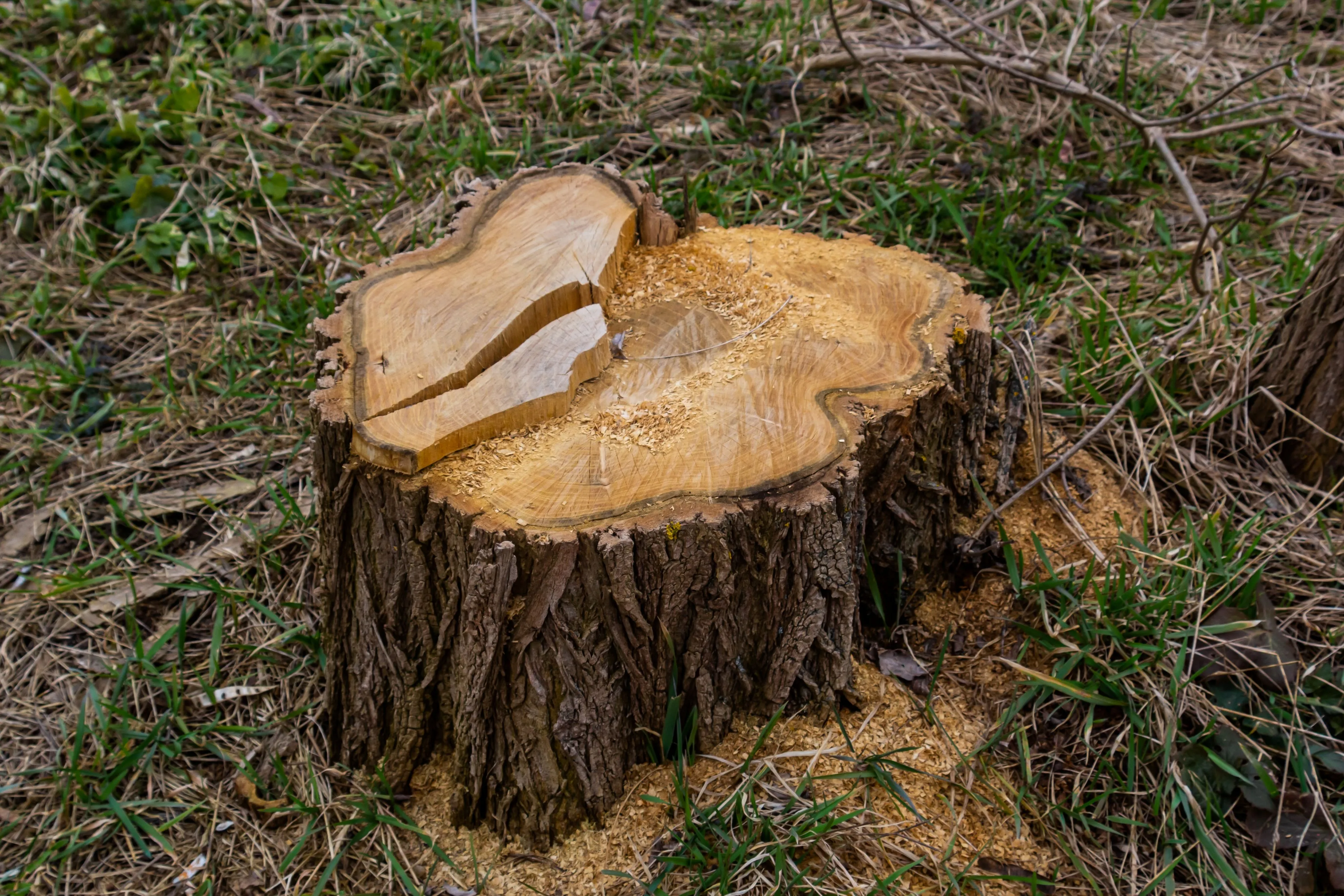
- Clear debris, including sticks and sawdust, after tree removal to prevent lawn hazards and nutrient depletion.
- Remove stumps to avoid safety risks, sucker shoots, or lawn damage; grinding or treating stumps prevents regrowth.
- Avoid replanting in the same spot; replace soil if necessary and fix depressions caused by decaying roots.
Whether a tree has to be removed because of disease, damage, or other reasons, taking it down is often a sad experience. And if tree felling is not followed by the necessary follow-up steps, it can lead to further damage to your yard or safety issues. Here are 11 mistakes to avoid after you have cut down a tree to prevent further hassles.
1. Insufficient Cleanup
Felling a tree entails lots of cutting, which leaves behind debris. While tree services generally remove limbs from the property and grind up branches, cleanup efforts sometimes miss sticks, bark, and chunks of wood in the lawn. These can become a safety hazard if the mower turns them into projectiles, so a thorough raking before mowing is a good precaution. And to play it safe, wear eye protection when mowing in case you overlooked any debris that can fly around.
2. Leaving Sawdust
Even after cleanup, there’s bound to be a fair amount of sawdust. This can smother grass and pull nitrogen from the soil as it breaks down, weakening plants and causing foliage to turn yellow. Remove as much sawdust as possible and consider using a high-nitrogen fertilizer over the area to compensate for residual sawdust.
3. Unnecessarily Removing a Tree Stump
In some cases, it’s actually beneficial to leave a tree stump in place—say, in an out-of-the-way corner in a naturalistic garden where it can serve an ecological purpose for insects, fungi, and wildlife. Tree stumps can also be carved into garden art or used as a pedestal for a large container or statue.
4. Leaving a Tree Stump in Place
In many cases, however, the best thing to do is remove the tree stump so it doesn’t detract from the lawn, become a safety hazard, or cause damage to the lawnmower.
5. Not Checking for Underground Utilities
If you’re planning to dig or grind up the stump and install replacement plants, call 811 and have utilities marked first.
Related
6. Underestimating the Labor Involved
While smaller trees can be dug up by hand, manually removing a stump becomes progressively harder the larger the tree. One option is to cut the trunk as close to the ground as possible, then cover the stump with soil and sod.
7. Ignoring Sucker Shoots
Some tree species resprout when cut down, sending out multiple new shoots that draw on the tree’s extensive root system to boost their growth rate. These sucker shoots can quickly form a thicket of stems that are unsightly, inherently weak, and prone to storm damage if allowed to mature. Stems should be removed early and often. More suckers may continue to appear for several years unless the stump is ground up or treated with tree stump killer.
8. Planting a New Tree in the Same Spot
It is not a good idea to plant a replacement tree in the same location as the old one. Depending on the size of the tree you just removed, the root system may be extensive, making digging difficult. If the stump has been ground into bits, you may be able to plant shrubs or perennials in that spot if the shredded wood bits are removed and replaced with topsoil. For easier digging, it’s best to plant a distance away from the original tree.
9. Leaving Ruts or Uneven Ground
When a tree is removed, or a stump is ground up, there is often a depression left behind. Fill ruts, depressions, and holes with topsoil and either turf or plants. And be prepared to top off the soil in the future as the remaining root system rots away, causing the soil to sag.
10. Choosing the Wrong Plants
If you leave a stump in place, it is not the best spot to plant. Most of a tree’s roots are in the top 18 inches of soil, so digging will be difficult. And if there are many roots present, the soil may be quite thin. Rather than planting tender bedding annuals that would struggle to penetrate the root-heavy soil, it may be better to plant a trailing groundcover a few feet away and let it sprawl over and around the stump over time.
11. Not Aerating the Ground
This is especially important because the ground can easily become compacted when heavy machinery or increased foot traffic is involved with the felling of a tree. That, coupled with leftover sawdust and hot, dry weather, can spell trouble for the lawn in particular.
- <span>Gardening</span>
- <span>Trees, Shrubs & Vines</span>
- <span>Caring for Trees & Shrubs</span>