While trimming is an annual task for many woody plants in the landscape, some low-maintenance shrubs demand minimal pruning. In fact, these shrubs develop the most pleasing shape without any shearing or shaping.
These low-maintenance shrubs thrive in a variety of growing conditions. From heat to drought to wet planting sites, there’s a shrub for nearly every growing challenge in this list. Plant these shrubs where they can expand to their mature size, and there will be no need to prune them aside from removing dead, diseased, or broken branches.
The very best way to minimize pruning when planting new shrubs is to put the right plant in the right place. When selecting shrubs, pay close attention to mature plant size and choose a shrub that has a mature size smaller than the planting spot. Keep in mind that nearby plants will grow and expand too.
American Arborvitae
An easy-care and cold-tolerant evergreen shrub, American arborvitae(Thuja occidentalis) makes an excellent hedge plant. It has a soft texture and medium green color. Its dense branching gives it a compact form that doesn’t need pruning, although it can be sheared for a more shaped, formal appearance if desired.
- Growing Conditions: Full sun to part shade; well-drained soil
- Size: 4-30 feet tall
- Zones: 3–8
Boxwood
Slow-growing boxwood (Buxus spp.) is a perfect candidate for minimal pruning (unless you grow it as a topiary). Boxwood is known for its compact growth and petite evergreen leaves. Plant boxwood where it has space to expand to its mature size, and you’ll enjoy these easy-care shrubs for years.
- Growing Conditions: Full sun to part shade; moist, well-drained soil
- Size: 2-10 feet, depending on type
- Zones: 4–9
Dwarf Conifers
Dwarf conifers bring year-round color and texture to any garden, whether it’s an entryway or a shrub border. With numerous varieties available, most dwarf conifers grow under 5 feet tall and wide, expanding just a few inches annually. If you’re looking for a vertical silhouette, consider planting the dwarf Alberta spruce (Picea glauca ‘Conica’). For a spherical shape with a striking blue color, opt for the dwarf globe blue spruce (Picea pungens ‘Globosa’).
- Growing Conditions: Full sun to part shade; well-drained soil
- Size: 2-5 feet tall, depending on type
- Zones: 3–9
These versatile plants are perfect for adding texture to rock gardens, enhancing container plantings, or lending interest to small spaces like patios and terraces.
Indian Hawthorn
Indian hawthorn (Rhapheolepis indica) is an excellent evergreen shrub for use as a hedge plant or an accent in a shrub border in places with mild winters. After blooming for many weeks in late winter to early spring, it takes a break until revealing a new set of flowers in fall. Two low-maintenance shrubs that are long-blooming varieties prized for their small size (2-4 feet tall) are ‘Eleanor Taber’ or ‘Ballerina.’
- Growing Conditions: Full sun to part shade; average, well-drained soil; drought-tolerant
- Size: 4 to 6 feet tall
- Zones: 8–10
Related
Inkberry Holly
Inkberry holly (Ilex glabra), native to eastern North America, is a hardy, slow-growing evergreen that adds year-round interest. In fall, female plants bear small black berries that are favorites among birds. Modern cultivars like ‘Nordic’ and ‘Gem Box’ feature dense growth, forming lush spheres in gardens without requiring pruning.
- Growing Conditions: Full sun to partial shade; tolerates a wide range of soils, from dry and sandy soil to slow-draining clay
- Size: 5-8 feet
- Zones: 3–9
For berries, ensure you plant both male and female specimens to encourage cross-pollination.
Meyer Lilac
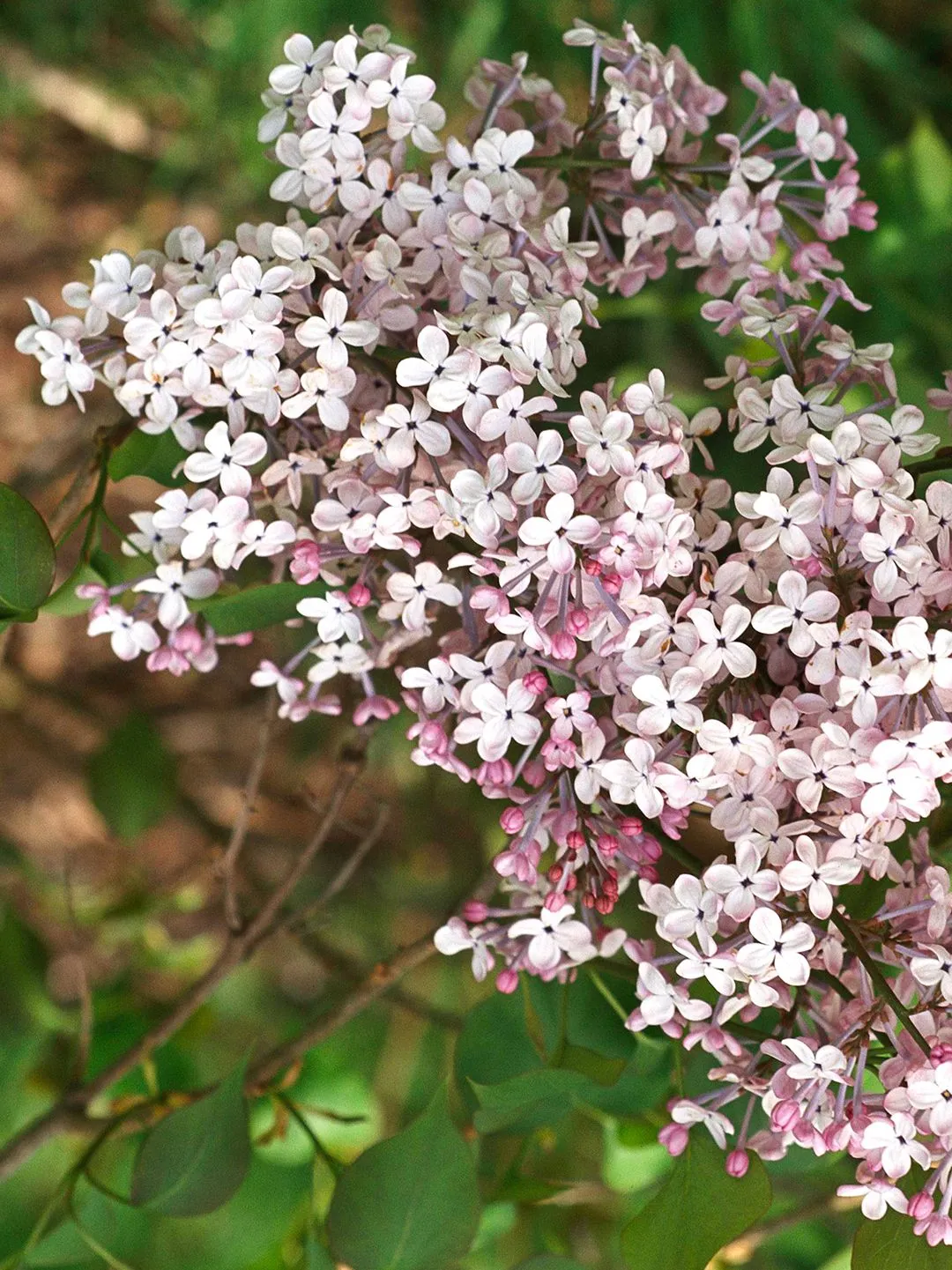
A compact version of the rangy traditional lilac, Meyer lilac (Syringameyeri) is a round, slow-growing, low-maintenance shrub that sports dense clusters of violet-purple flowers in the spring. The flower clusters fade and seemingly disappear into the clean green foliage. Though not evergreen, it’s highly disease-resistant and blooms reliably.
- Growing Conditions: Full sun to part shade; average soil; tolerates periods of drought
- Size: 4 to 5 feet tall
- Zones: 3–7
Rose of Sharon
Popular with bees and hummingbirds, rose of Sharon (Hibiscus syriacus) is a summer-blooming shrub loaded with large flowers from midsummer through frost. Plant this low-maintenance shrub where it can expand to 10 to 12 feet tall and 4 to 6 feet wide.
- Growing Conditions: Full sun; moist, well-drained soil; drought-tolerant
- Size: 10-12 feet tall
- Zones: 5–9
Viburnums
There are many varieties of viburnums to choose from. Generally, viburnums have an upright, loose habit and grow 6 to 12 feet or more tall. Viburnums are prized for their spring flowers, summer or fall berries, and colorful autumn foliage. Korean spice (Viburnum carlesii, shown here) and burkwood viburnum (Viburnum x burkwoodii) are delightfully fragrant species.
- Growing Conditions: Full sun to part shade; moist, well-drained soil
- Size: 5-12 feet tall
- Zones: 4–8
A Shrub for Every Garden
- <span>Gardening</span>
- <span>Trees, Shrubs & Vines</span>
- <span>Caring for Trees & Shrubs</span>
“Ilex glabra.” North Carolina Plant Toolbox Extension Gardener.
<em>“Syringa meyeri.”</em> Ohio State University.